Around here, we know a thing or two about creatures who are misunderstood because of their behavior.
Sometimes the child who looks angry is frightened.
The child who looks controlling may feel unsafe.
The child who refuses may be overwhelmed.
And the child everyone keeps calling “difficult” may be communicating something they cannot explain yet.
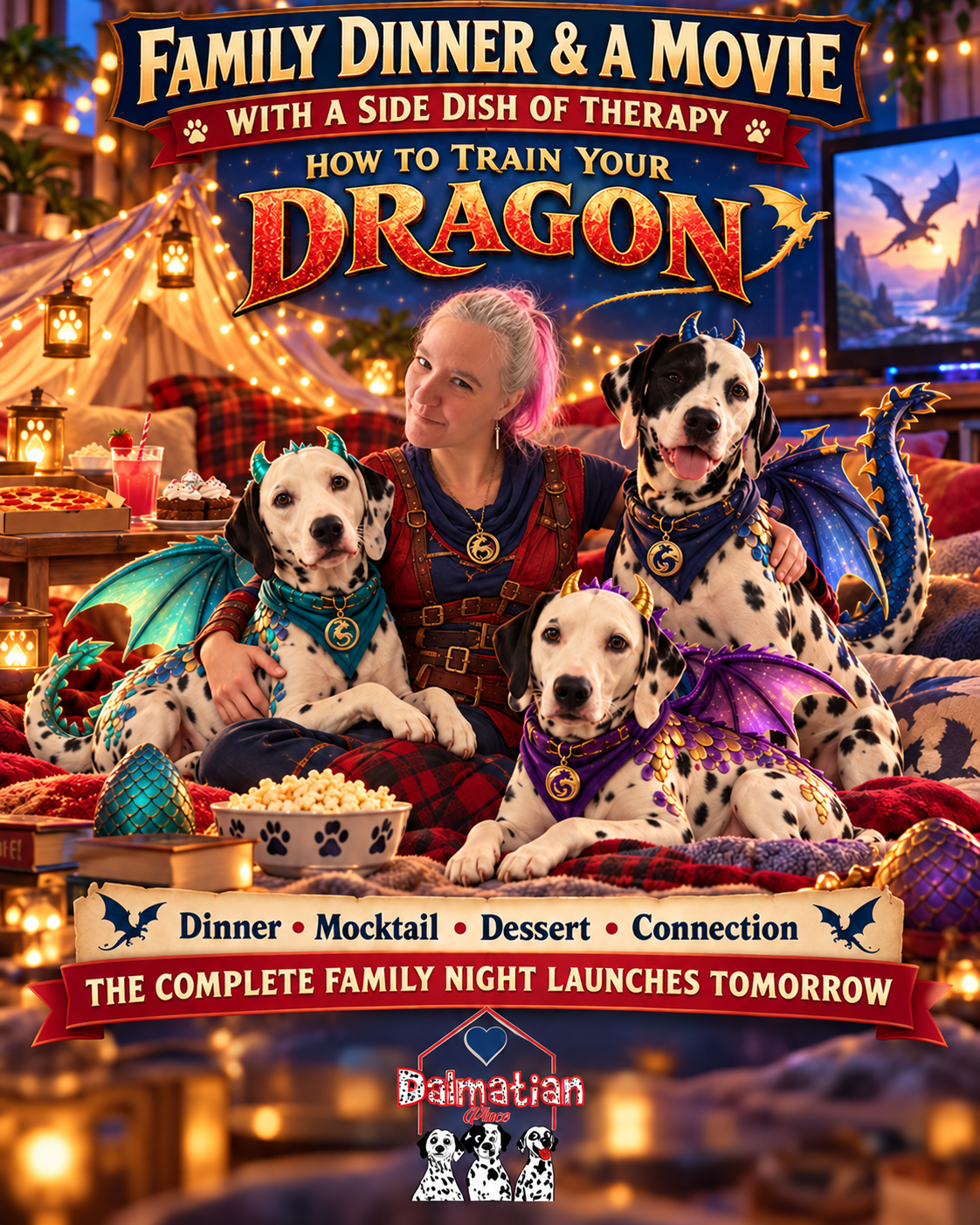
That makes How to Train Your Dragon a nearly perfect Dalmatian Place movie night.
Hiccup does something radical: He becomes curious about the creature everyone else has already decided is dangerous. Instead of using more force, he slows down, pays attention, and begins spotting clues.
And Toothless does not immediately trust him simply because Hiccup has good intentions.
Trust develops gradually, through safety, consistency, respect, repair, and approximately one questionable fish dinner. 🐟
This month’s movie night gives families a playful, low-pressure way to talk about fear, courage, behavior, belonging, and the kind of trust that cannot be commanded.
No forced family meeting. No emotional pop quiz. Just an easy dinner, a dragon movie, and a few opportunities to understand one another differently.
Tonight’s Viking Menu
🥔 Berk’s Build-Your-Own Dragon Rider Potato Bar
This dinner is deliberately simple, customizable, and friendly to different sensory preferences. Everyone can choose what touches their potato AND what absolutely does not.
Ingredients for 6
6 large russet potatoes or sweet potatoes
3 cups shredded rotisserie chicken
1 can black beans, drained and rinsed
2 cups broccoli florets, steamed
2 cups shredded cheddar cheese
1 cup plain Greek yogurt or sour cream
½ cup sliced green onions
½ cup cooked turkey bacon or regular bacon, crumbled, optional
Barbecue sauce
Butter
Salt and pepper
( Tip: Use gluten-free barbecue sauce and verify the rotisserie-chicken seasoning if your family needs the meal to be gluten-free.)
Easy directions
Heat the oven to 425°F.
Scrub the potatoes, pierce them several times with a fork, and rub them lightly with olive oil and salt.
Bake for approximately 45–60 minutes, depending on size.
Warm the chicken and black beans. Steam the broccoli.
Place the toppings in individual bowls and let each dragon rider build their own dinner.
Faster option
Microwave the potatoes until tender, then place them in the oven or air fryer for several minutes to crisp the skins.
Sensory-friendly note
Deconstructed food still counts as dinner.
A child may prefer plain chicken, cheese in a separate pile, an untouched potato, or only familiar toppings. Movie night does not need to become a food-challenge night. Connection works better when everyone’s nervous system is not already battling the plate.
🥕 Viking Veggie Spears
Set out sliced cucumbers, carrots, sweet peppers, or whatever raw vegetable your family actually eats.
Calling them “Viking spears” will not magically make every child love vegetables—but it does improve the presentation considerably.
Toothless’s Night Fury Fizz 🌙🐉
This dark, bubbly mocktail brings the drama without requiring complicated ingredients.
Ingredients for 6
1½ cups blueberries, fresh or frozen
2 cups cranberry juice
½ cup fresh lime juice
4 cups lime sparkling water or lemon-lime soda
1–2 tablespoons honey or maple syrup, optional
Ice
Extra blueberries and lime wedges for garnish
Directions
Blend or muddle the blueberries with the cranberry juice and lime juice.
Strain the mixture if your family does not enjoy berry texture.
Divide it between ice-filled glasses.
Add sparkling water immediately before serving.
Garnish with blueberries and lime.
For a sweeter drink, use lemon-lime soda. For less sugar, use unsweetened sparkling water and add only enough honey or maple syrup to soften the tartness.
Dragon Egg Sundae Nests 🥚🔥
No elaborate baking challenge required.
Ingredients for 6
6 brownie squares or gluten-free brownie bites
Vanilla ice cream or frozen yogurt
Blueberries
Chocolate or caramel drizzle
Colorful sprinkles, optional
Directions
Place one brownie on each plate.
Add a scoop of ice cream to create the “dragon egg.”
Arrange blueberries around the base as the nest.
Add a small drizzle of chocolate or caramel.
Finish with a few sprinkles if desired.
If you want to simplify it further, buy the brownies and move along with your life. The therapeutic value of this evening is not dependent upon a homemade dessert. 😉
The Side Dish of Therapy: Trust Changes Everything
One of the most meaningful parts of How to Train Your Dragon is not that Hiccup “trains” Toothless.
It is that Hiccup begins to understand him.
He watches.
He notices patterns.
He recognizes fear beneath aggression.
He learns what makes Toothless feel threatened, what helps him approach, and what allows connection to grow.
That shift, from judgment to curiosity, is where families often begin spotting the resolve.
Behavior Is a Clue
Toothless’s defensive behavior makes sense when we understand what has happened to him and what he believes he must do to survive.
Children are not dragons, of course, even when the after-school fire-breathing suggests otherwise.
But children may also protect themselves through:
Anger
Avoidance
Control
Silence
Perfectionism
Defiance
Withdrawal
Humor
Refusal
Explosive behavior
Acting as though they do not care
These behaviors still require boundaries and support. Understanding the behavior does not mean permitting harm or removing every expectation.
It means asking a better question:
What might this nervous system be trying to protect?
Safety Comes Before Vulnerability
Hiccup cannot demand that Toothless trust him. He has to become someone who behaves in trustworthy ways.
Children work similarly.
We cannot require immediate honesty, affection, eye contact, disclosure, calmness, or connection simply because an adult has decided that it is time.
Trust grows when children repeatedly experience adults who are:
Predictable
Curious
Respectful
Emotionally safe
Willing to repair mistakes
Able to remain steady around big feelings
Interested in the child beneath the behavior
Regulation Is Not the Same as Compliance
A child can look calm while feeling terrified internally.
They can sit still, say yes, make eye contact, earn good grades, and follow every rule while their nervous system is working desperately to prevent rejection or failure.
The goal is not simply to create a child who looks easier to manage.
The goal is to help the child experience genuine safety, connection, self-understanding, and the ability to communicate their needs.
Differences Are Not Defects
Hiccup does not fit the Viking community’s expectations. Toothless does not fit their assumptions about dragons.
Both are treated as though their differences make them deficient.
But those differences eventually become the very qualities that make connection and change possible.
Families do not need every nervous system to work the same way. They need enough curiosity to understand how each person communicates, regulates, connects, and experiences the world.
Conversation Starters
Keep these optional. Let everyone pass. Parents can answer first so children do not feel as though the movie has secretly become an assessment.
Before the movie
What do you think makes someone trustworthy?
Is it possible to feel scared and brave at the same time?
If you had a dragon, what would you name it?
During the movie
What clues show that Toothless is frightened?
When does Hiccup begin to see Toothless differently?
What helps Toothless become curious about Hiccup?
When do the other characters make assumptions without enough information?
What does Hiccup need that the adults around him do not initially understand?
After the movie
Which character did you understand most?
When did Hiccup show courage?
When did Toothless show courage?
What is the difference between forcing cooperation and building trust?
What helps you feel safe enough to try something difficult?
How can someone tell when you are becoming overwhelmed?
Do you prefer help, space, information, humor, movement, or quiet when you are stressed?
Who would be part of your dragon-riding crew?
What is one strength you noticed in someone else tonight?
Create Your Family Dragon-Training Manual
Every dragon, and every nervous system, needs a different approach.
Give each person a piece of paper and invite them to complete the following:
My Dragon Clues:
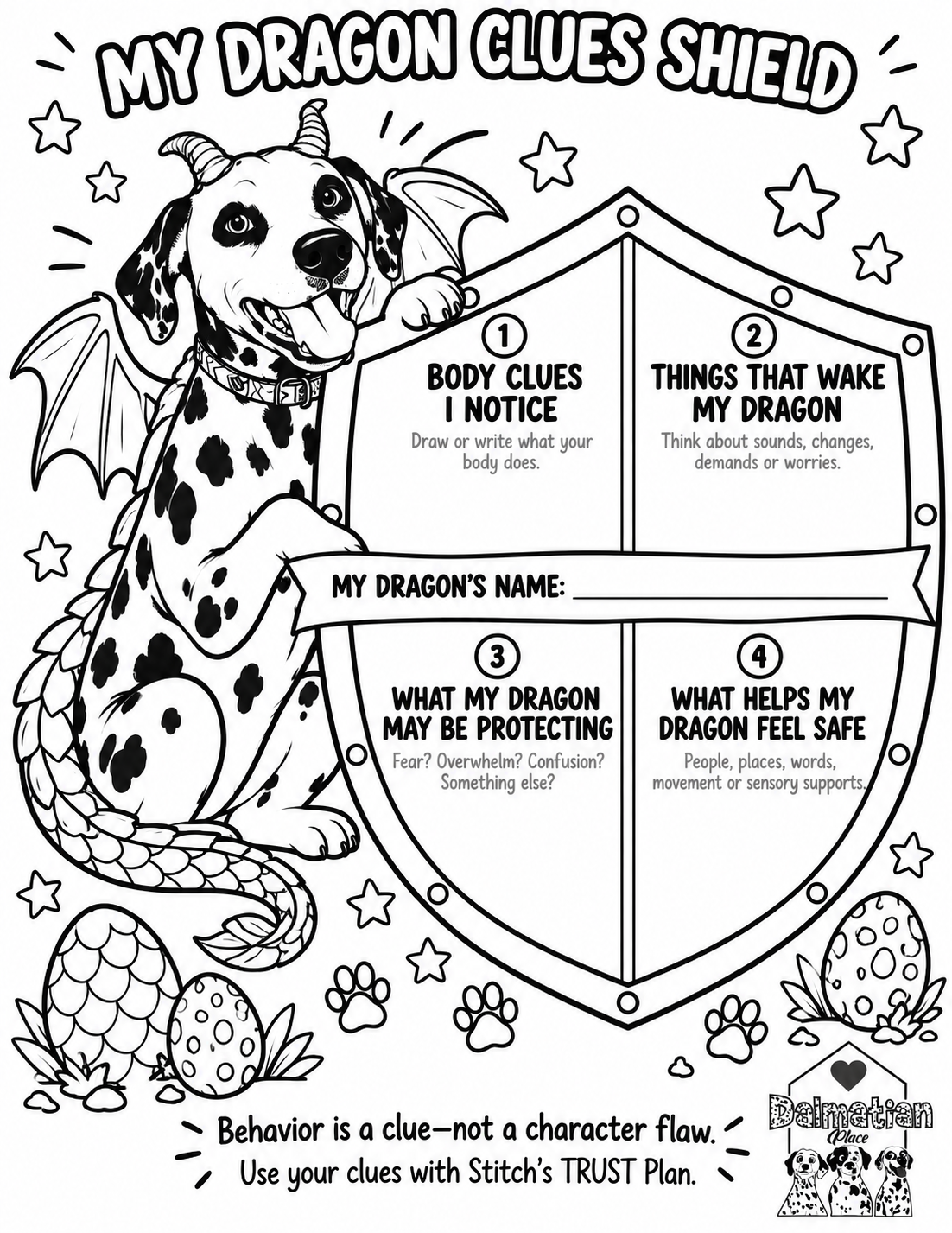
My fire starts to flare when…
Examples might include feeling rushed, being hungry, unexpected changes, loud sounds, difficult homework, feeling misunderstood, losing control, or worrying about disappointing someone.
You may notice…
List the clues others might see: becoming quiet, talking faster, snapping, pacing, crying, joking, arguing, hiding, freezing, or repeatedly saying “I don’t know.”
What usually helps me is…
Possibilities include:
Time
Movement
A snack
Clear information
Fewer words
Music
Humor
A hug
No touching
Sitting nearby
Help beginning
A written plan
Quiet
Playing with an animal
Knowing what happens next
What usually makes it harder is…
This might include lectures, repeated questions, being crowded, raised voices, sarcasm, surprise consequences, forced eye contact, or being told to calm down.
No one has to share everything they write. Family members may choose one clue and one helpful response to share.
Stitch’s TRUST Plan 🐾
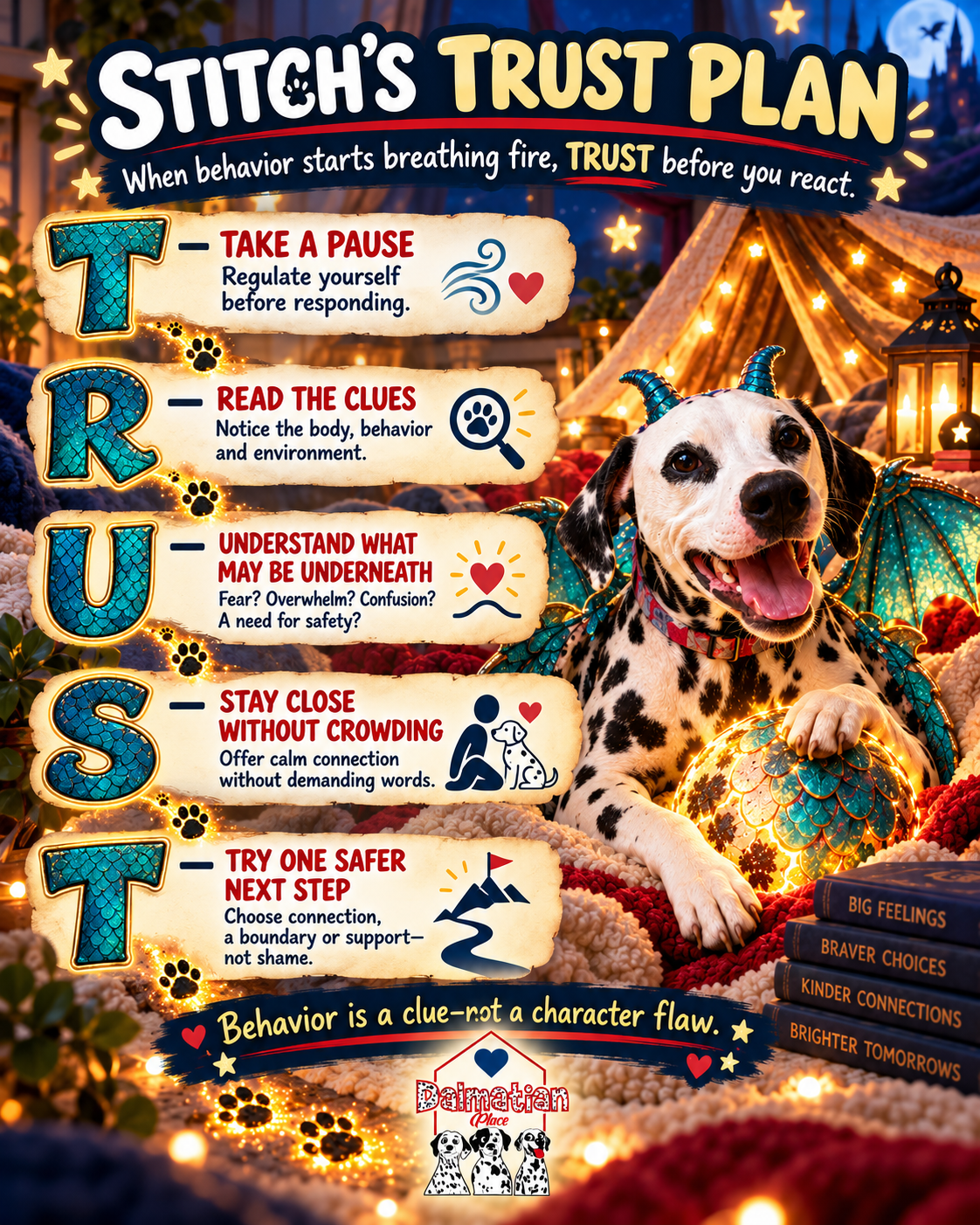
When someone’s internal dragon begins breathing fire, try:
T — Take a pause
Slow the moment down before adding more words, questions, or consequences.
R — Read the clues
Notice body language, tone, movement, silence, sensory stress, hunger, fatigue, fear, or uncertainty.
U — Understand what may be underneath
Behavior can communicate overwhelm, anxiety, shame, confusion, disconnection, sensory overload, or a need for control.
S — Stay close without crowding
Offer connection while respecting the person’s need for space, quiet, or reduced demands.
T — Try one safer next step
Do not solve everything at once. Choose the next step the nervous system can realistically manage.
Try saying:
“I can see this is getting hard. You do not have to explain everything right now. Would you like help, space, or for me to sit nearby?”
A Note for Parents
The lesson is not that enough patience, fish, or gentle parenting will instantly resolve every difficult behavior.
Some children need professional support. Some behaviors create real safety concerns. Parents also have nervous systems, limits, histories, and support needs.
Curiosity and boundaries can exist together.
You can say:
“I understand that you are overwhelmed, and I will not let you hurt me.”
You can validate fear without removing every necessary expectation.
You can repair a relationship without pretending the rupture did not matter.
And you can ask for help before the entire family is living in survival mode.
Frequently Asked Questions
What age is this movie night best for?
The movie and activities can work for elementary-aged children, teens, and mixed-age families. Adjust the questions to match your child’s developmental level, attention span, and interest.
Which version of How to Train Your Dragon should we watch?
Choose the version your family enjoys and can access. The themes of trust, courage, difference, and seeing beneath behavior can be explored across versions.
What if my child does not want to answer the questions?
Let them pass.
The goal is connection, not extracting a therapeutic insight. Children may engage more while eating, drawing, moving, playing with a pet, or talking later when the pressure is gone.
Should we pause the movie to discuss every meaningful moment?
Probably not. Ok, definitely NOT!
If your child naturally comments, follow their lead. Otherwise, choose one or two questions after the movie. Constantly stopping the story may make the evening feel like disguised homework.
What if my child relates strongly to the “dangerous” character?
Stay curious rather than correcting the identification.
You might say:
“What do you think people misunderstand about that character?”
Their answer may offer a safer way to talk about experiences that feel too personal to discuss directly.
Is this movie night therapy?
No. It is a playful, family-connection resource informed by therapeutic principles. It cannot replace individualized assessment or treatment with a qualified mental health professional.
How do I know when my child may need additional support?
Consider seeking professional guidance when anxiety, anger, withdrawal, perfectionism, school distress, physical complaints, meltdowns, shutdowns, sleep difficulties, or family conflict are persistent, worsening, creating safety concerns, or interfering with daily life.
You do not have to wait until the situation becomes unbearable.
When the Fire Feels Bigger Than One Movie Night
Maybe you recognize the child who is repeatedly treated like the dangerous dragon.
Maybe your child holds everything together at school and breathes fire the moment they reach home.
Maybe your family has tried consequences, rewards, lectures, reassurance, and every strategy the internet can offer, but everyone still feels stuck.
Dalmatian Place offers intentional, trauma-informed, and neurodivergent-affirming counseling for children, teens, adults, parents, and families.
We do not simply ask:
“How do we stop this behavior?”
We also ask:
“What happened, what is needed, and what is this nervous system trying to communicate?”
If your family needs help building safety, trust, regulation, and connection, call Dalmatian Place at (903) 309-3656 to ask about current openings.
Your child is not a dragon to tame.
They are a whole person asking to be understood.
Dalmatian Place
Therapy for the WHOLE family, in Longview, Texas
We spot clues—not flaws. 🐾
