5 Signs Your Child's Meltdowns May Be About More Than Behavior | Child Therapy in Longview, TX
5 Signs Your Child's Meltdown May Be About More Than Behavior
Wondering why your child has frequent meltdowns? Learn 5 signs your child's emotional outbursts may be about more than behavior and discover how play therapy can help.
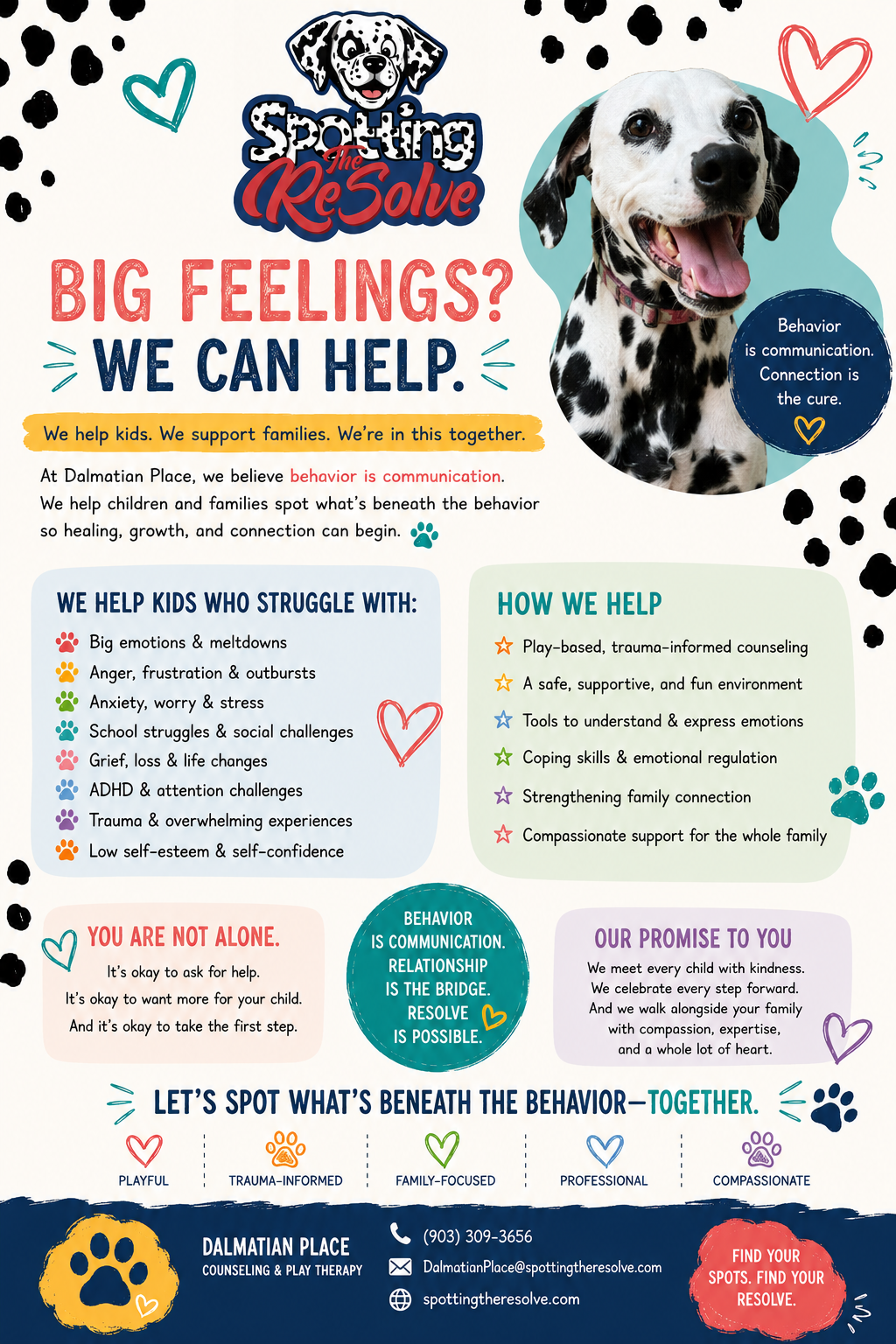
Is your child's meltdown really about behavior—or could it be a sign of something deeper? Many parents feel frustrated, confused, or overwhelmed when their child has frequent emotional outbursts. While it's easy to focus on the behavior itself, understanding what's happening beneath the surface can make all the difference.
At Dalmatian Place Counseling & Play Therapy, we believe that behavior is communication. A meltdown is often a child's way of expressing emotions, stress, or unmet needs they don't yet have the skills or words to communicate.
In this article, we'll explore five signs that your child's meltdowns may be about more than behavior and how you can begin responding with curiosity and connection.
What if the Meltdown Isn't the Problem?
As parents, it's natural to focus on what we can see:
Tears
Yelling
Defiance
Shutting down
Aggression
Emotional explosions
But what if those behaviors are actually messages?
Sometimes a child's meltdown isn't about being difficult, manipulative, or attention-seeking. Instead, it may be a sign that something underneath the surface needs support.
Here are five signs your child's meltdowns may be about more than behavior.
1. Why Does My Child Overreact to Small Things?
Your child spills their drink and suddenly they're sobbing.
You ask them to turn off a video game and they explode.
A small disappointment turns into a major emotional storm.
When reactions seem much bigger than the event itself, it may be a sign that your child is carrying stress, anxiety, overwhelm, grief, or frustration that has been building beneath the surface.
The meltdown isn't always about what just happened. Sometimes it's about everything that happened before it.
🐾 Ask yourself:Could my child be overwhelmed rather than simply overreacting?
2. Why Does My Child Melt Down Over the Same Things?
Does your child consistently struggle with:
Transitions
Changes in routine
School mornings
Homework
Loud environments
Being told "no"
Repeated triggers often point to an underlying need rather than intentional defiance.
For some children, anxiety, sensory sensitivities, ADHD, autism, or emotional regulation challenges can make everyday situations feel much harder than they appear.
🐾 Ask yourself:What might this situation feel like from my child's perspective?
3. They Have a Hard Time Explaining What They're Feeling
After a meltdown, many children cannot tell you what happened.
You may hear:
"I don't know."
"Nothing."
"Leave me alone."
"I can't explain it."
Children often experience emotions before they have the words to describe them.
When kids don't yet have the language for what they feel, those feelings often come out through behavior.
🐾 Remember: Not being able to explain emotions doesn't mean those emotions aren't real.
4. Can Stress, Trauma, or Grief Cause Child Meltdowns?
Sometimes meltdowns begin after:
A move
Divorce or family changes
Loss of a loved one
Medical challenges
Bullying
Academic struggles
A frightening event
Changes in friendships
Children may not always talk about what is bothering them, but their behavior often tells the story.
Big emotions can show up as:
Anger
Withdrawal
Clinginess
Anxiety
Increased emotional outbursts
🐾 Ask yourself:What has my child experienced recently that may be affecting them emotionally?
5. Your Family Feels Stuck
Perhaps you've tried:
✅ Consequences
✅ Rewards
✅ Sticker charts
✅ Taking things away
✅ Having talks
✅ Reading parenting books
And yet everyone still feels frustrated, exhausted, or disconnected.
When families feel stuck, it often means the solution requires understanding what's beneath the behavior—not simply trying harder to stop it.
🐾 Sometimes children need support learning how to understand, express, and regulate their emotions in a safe environment.
Why Understanding the Root Cause Matters
When we focus only on stopping a behavior, we may miss the opportunity to understand what our child is trying to communicate.
Children who struggle with emotional regulation often benefit from:
Learning emotional vocabulary
Developing coping skills
Building self-awareness
Strengthening parent-child connection
Processing difficult experiences
Feeling understood and supported
By looking beneath the behavior, parents can respond with empathy while still maintaining healthy boundaries and expectations.
A Different Way to Look at Meltdowns
At Dalmatian Place, we believe:
❤️ Behavior is communication.
❤️ Connection is the bridge.
❤️ Every child has strengths.
❤️ Every family deserves support.
Through play therapy and trauma-informed child counseling, we help children and families understand what's beneath the behavior
How Play Therapy Helps Children with Meltdowns
Many parents wonder whether their child will simply "grow out of" emotional outbursts.
While some developmental challenges improve with age, children who struggle with frequent meltdowns often benefit from learning emotional regulation skills in a supportive environment.
At Dalmatian Place Family Therapy Center in Longview, Texas, we help children:
Understand big feelings
Develop coping skills
Improve emotional regulation
Build confidence
Strengthen family relationships
Process anxiety, grief, trauma, and life transitions
Because play is a child's natural language, play therapy allows children to communicate experiences they may not yet have words to explain.
When children feel understood, they are often better able to manage emotions, navigate challenges, and build stronger connections with the people who love them most.
Frequently Asked Questions (FAQs)
Are meltdowns normal for children?
Yes. Occasional meltdowns are a normal part of child development. Children are still learning how to manage emotions, communicate needs, and cope with frustration. However, frequent or intense meltdowns may indicate that additional support is needed.
What's the difference between a tantrum and a meltdown?
A tantrum is often goal-oriented and may stop when a child gets what they want or realizes it won't work. A meltdown is typically an emotional overload where the child feels overwhelmed and has difficulty regaining control, even if they want to.
Can anxiety cause meltdowns in children?
Absolutely. Anxiety can make everyday situations feel overwhelming and may lead to emotional outbursts, avoidance, irritability, or shutdowns. Children often express anxiety through behavior rather than words.
When should I seek counseling for my child's meltdowns?
Consider seeking professional support if meltdowns are frequent, intense, impacting daily life, affecting school or relationships, or causing significant stress for your family.
How does play therapy help with emotional regulation?
Play therapy allows children to express feelings, process experiences, and develop coping skills through play—their natural language. It can help children better understand emotions and learn healthier ways to communicate their needs.
Can parenting strategies alone solve meltdowns?
Parenting strategies are important, but if a child is struggling with anxiety, trauma, sensory challenges, ADHD, grief, or emotional regulation difficulties, additional support may be beneficial. Understanding the root cause is often key to lasting change.
You Don't Have to Figure It Out Alone.
If your child's meltdowns are leaving your family feeling overwhelmed, frustrated, or disconnected, support is available.
Let's spot what's beneath the behavior—together.
Not sure where to start?
Schedule a free consultation and we'll help you determine whether counseling, play therapy, parent support, or another service might be the best fit for your child and family.
Looking for Help with Child Meltdowns in East Texas?
Families throughout Longview, Hallsville, White Oak, Kilgore, Marshall, Gilmer, and the surrounding East Texas communities often reach out when they feel stuck in a cycle of meltdowns, emotional outbursts, anxiety, or behavior challenges. If you've tried consequences, rewards, reminders, and parenting strategies but still feel like something deeper is going on, you're not alone. At Dalmatian Place Family Therapy Place, we help children and families understand what's beneath the behavior through play-based, trauma-informed counseling that focuses on connection, emotional regulation, and lasting growth.
Dalmatian Place Counseling & Play Therapy
📞 (903) 309-3656
📧 DalmatianPlace@spottingtheresolve.com
🐾 Find Your Spots. Find Your ReSolve.
